On Tuesday, August 12, 2025, Cast was immensely honored to host Jennifer Siebel Newsom, First Partner of California, and actress and activist Mira Sorvino, at our transitional shelter, Mariposa Haven, in Los Angeles. Their visit highlighted the urgent realities survivors face today, shining a light on the challenges, strengths, and needs of those impacted by human trafficking.
| Understanding the Landscape: 5 Urgent Realities Facing Survivors Today |
| 1. Stable housing is the foundation of long-term healing and safety for survivors of human trafficking. At Cast shelters, every survivor receives more than just a place to sleep — they get case management, trauma-informed mental health care, legal support, education, and job readiness services. These wraparound services are what make healing possible and prevent re-exploitation. |

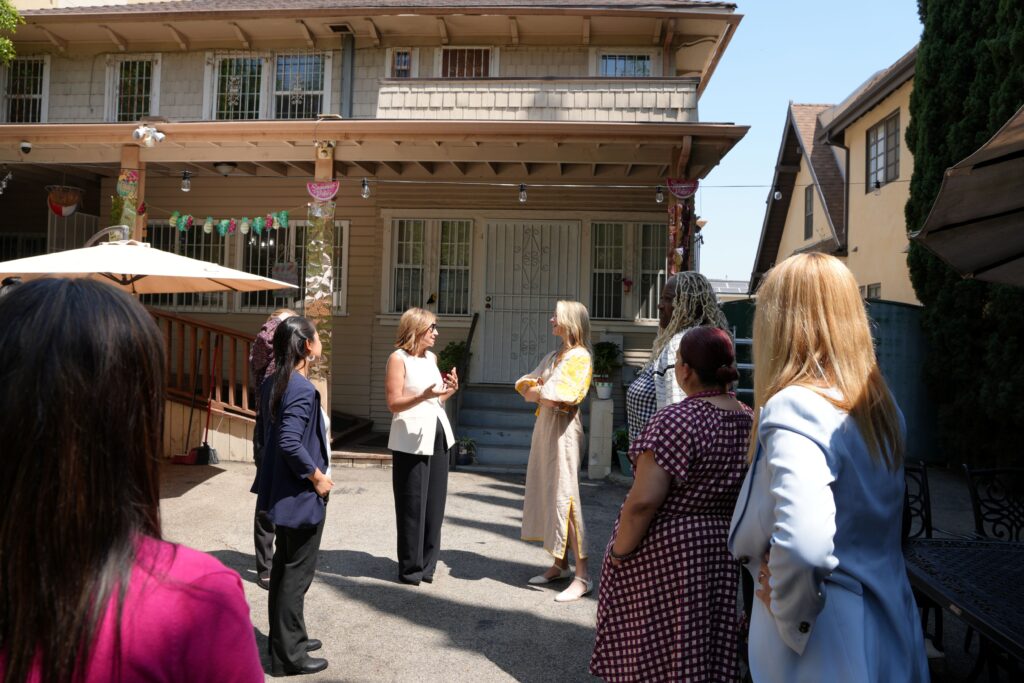
(Top) Jennifer Siebel Newsom, First Partner of California, with Mira Sorvino, Actress and Activist (Bottom) Cast staff introduce the First Partner to the shelter.
| 2. Immigration status can be a major barrier to safety and services, and the need has only grown. Changes in federal policy, backlogs in immigration relief, and increased fear among immigrant communities have made it harder than ever to serve survivors who are undocumented or seeking asylum. Immigrant survivors need specialized legal and social services, like the services provided at Cast, more than ever. |
| 3. Many survivors are criminalized before they’re identified, and these records follow them for life. Survivors are often arrested for offenses they were forced to commit while being trafficked — things like theft, trespassing, or sex work-related charges. These records can prevent them from getting jobs, housing, or even custody of their children. Cast offers specialized legal support for criminalized survivors and advocates for policies that expand crucial legal remedies. |
| 4. Most funding and policy attention go to minors, but the majority of survivors we serve are adults. Adult survivors often face longer periods of exploitation and greater barriers to recovery, with fewer available resources. They’re also more likely to be overlooked in program design, outreach, and services. We need age-inclusive support and funding models to truly stop trafficking in its tracks. 5. Without access to fair pay, safe jobs, and economic opportunity, survivors are vulnerable to re-trafficking. Poverty and lack of economic opportunity fuel human trafficking. For survivors to heal and rebuild, access to fair pay, safe jobs, and supportive economic resources is essential. Without these opportunities, survivors remain vulnerable to re-trafficking and exploitation. Financial independence gives survivors the stability and confidence to reclaim their lives, pursue education or training, and build a future free from coercion and fear. |
A snapshot of 2024 at Cast:
- 71% of callers to Cast’s hotline were homeless when they first reached out for services.
- 100% of Cast graduates had safe housing when they completed long-term services.
- Nearly one in three (32%) of survivors in Cast services were foreign nationals from over 43 countries.
- 100% of T visa and Green Card applications were approved through Cast’s Legal program.
- Nearly two out of every three survivors (63%) served last year were forced to commit crimes by their trafficker.
- 78% of survivors served were adults over the age of 18.
- Starting in 2024, nearly half (45%) of federal funds from the Victims of Crime Act (VOCA) were cut
What You Can Do to Help
- Donate to fund urgent legal and support services for survivors
- Partner with Cast to advance local and statewide change
- Collaborate with our advocacy partners across California
- Learn more and share the facts: www.castla.org