Last fall, The New York Times Magazine published a story about the “Blade,” a stretch of Figueroa Street in Los Angeles where sex work and trafficking, including the exploitation of minors, occur. For many readers, the story was shocking. For those of us who work directly with survivors, it was something else entirely: deeply troubling. The story’s sensationalist approach boosted its circulation, leading to copycat media stories and increased policing and arrests of survivors, among other consequences.
What disturbed us most was not that trafficking was being reported on, but how it was reported. The story included photos of survivors, some likely minors, in moments of active exploitation and police detention, alongside identifying details that could compromise their dignity and safety. Images of young people being handcuffed were presented as evidence of “rescue.” And, the narrative was almost entirely centered on elevating law enforcement as the saviors of survivors, sweeping in to “rescue” them.
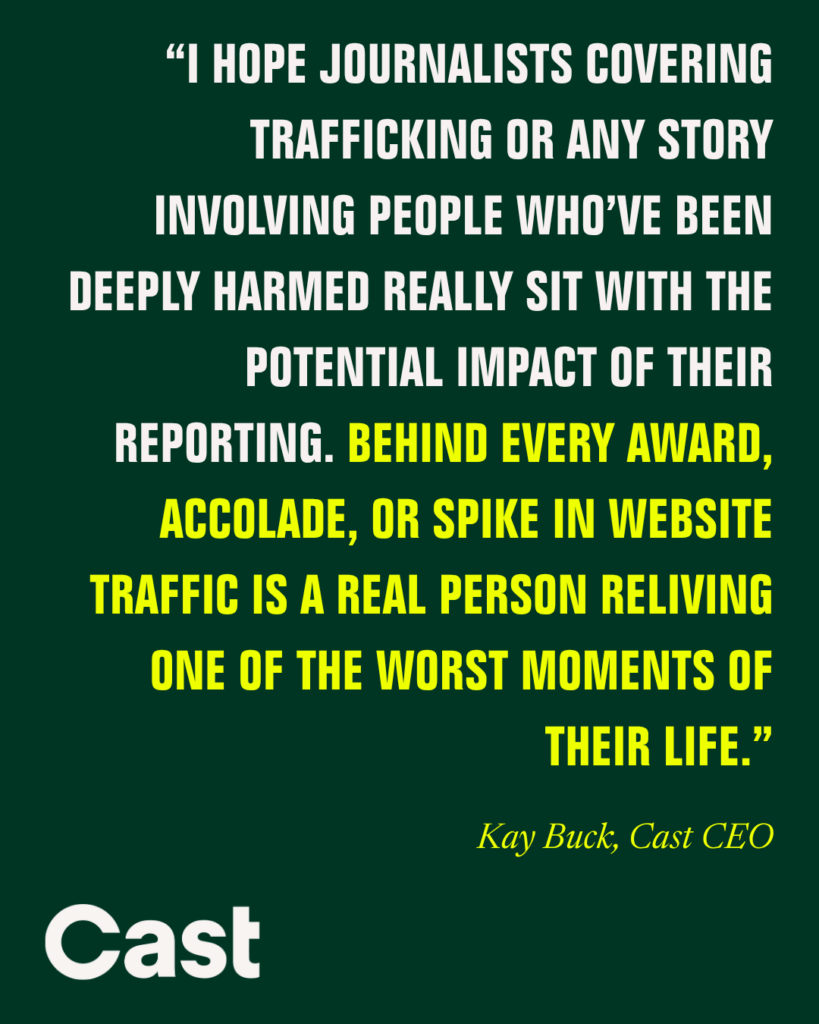
At Cast, we immediately contacted The New York Times Magazine writer after publication to express concern about the harm caused by the story and the re-exploitation through the published images, and to request that the images be removed. Our concerns were dismissed. We then joined fellow survivor-serving organizations to raise broader ethical questions about the story’s approach and the tropes it reinforced, and we reached out to the Magazine’s photo editor through a coalition letter. Again, we were shut down.
Weeks later, the Columbia Journalism Review — a respected media watchdog — began its own examination of the ethics behind The New York Times’ reporting practices, echoing concerns already raised by advocates and survivors. The review mattered because it showed this conversation had grown beyond a single article.
On May 20, the Columbia Journalism Review published a detailed critique of the Times’ coverage of trafficking on the Blade. The piece questioned the legality and ethics of the reporting methods used, as well as editorial decisions about whose voices and perspectives were prioritized. Most significantly, it challenged the Times’ portrayal of law enforcement as the central authority in trafficking narratives and questioned how survivors’ stories were framed and how meaningful consent was obtained.
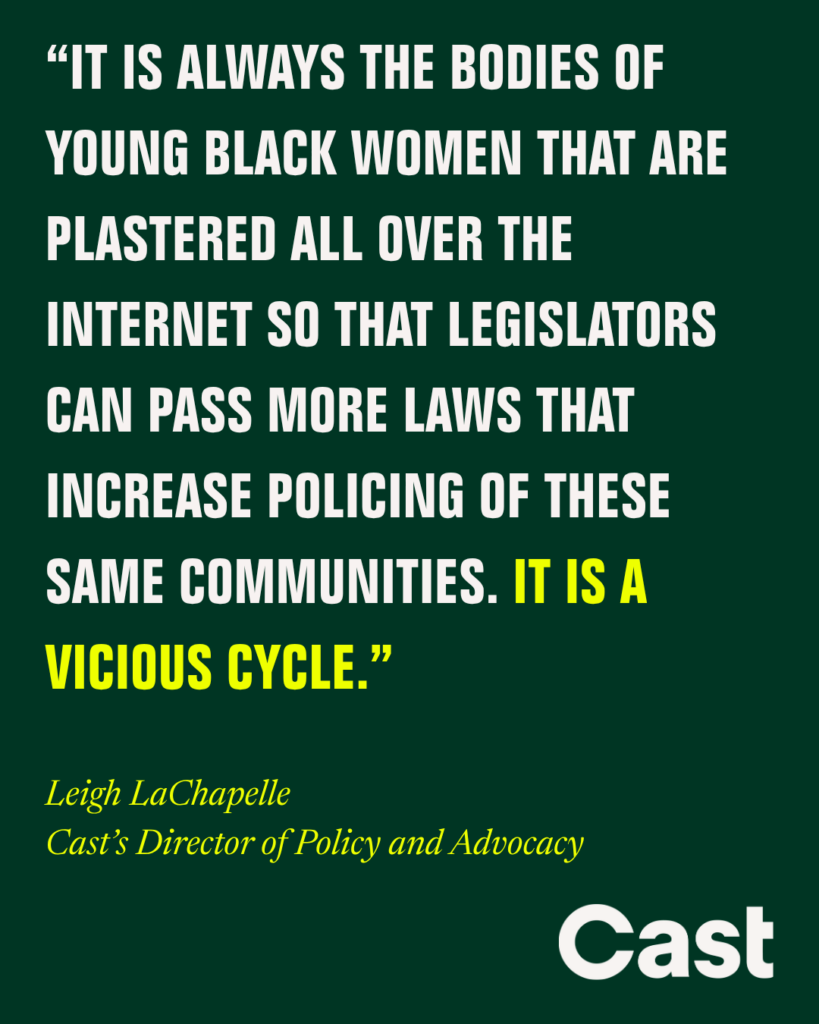
Ethical journalism and the Times’ dismissal of such practices in a story about trafficking survivors matter deeply because these stories powerfully shape public understanding and policy and can affect survivors’ lives. When reporting relies on sensational imagery or frames exploitation with law enforcement as the hero, there to “rescue,” it reinforces harmful myths that hurt survivors.
Trafficking survivors are not props in a narrative, nor are they statistics. They are real people navigating trauma, coercion, instability, and survival. Reporting on their experiences requires a duty of care that extends beyond traditional journalistic norms. They are the heroes of their own story, and no one else has the right to capitalize on or profit from it, whether it is law enforcement, reporters, or elected officials.
Trafficking Is a Public Health Issue, not a Law Enforcement Issue
For decades, Cast has worked alongside survivors across Los Angeles and nationally through legal services, housing, advocacy, and systems change. That experience makes one thing clear: human trafficking cannot be understood through a law-enforcement lens alone.
What often drives exploitation are the conditions surrounding vulnerability in the first place:
- unstable housing
- poverty and economic instability
- family separation, violence or rejection
- racism and discrimination
- immigration-related fear
- untreated trauma
- lack of opportunity
- criminalization of survival behaviors
Survivors consistently tell us that safety and stability come from housing, healthcare, trusted relationships, immigration protections, economic opportunity, and long-term support. Not police “rescue” operations.
Handcuffing survivors to “rescue” them, as The New York Times Magazine story portrayed, deepens trauma and creates barriers to housing, employment, education, and recovery. Much of Cast’s work involves helping survivors clear criminal records they received from such encounters. We do not end exploitation by inflicting more trauma.
So, when observers ask why young people return to the Blade after police show up, the answer is clear: detention is not safety.
Cast is the nation’s largest direct service provider supporting survivors and runs LA’s 24/7 human trafficking hotline. Less than 1% of hotline calls come from law enforcement. Most calls come from survivors themselves who reach out. That reality challenges the myth that police-led intervention is the primary pathway out of exploitation.
A Better Path Forward
Los Angeles is at a crossroads. We can continue investing in strategies rooted primarily in policing, or we can build systems grounded in prevention, care, and long-term safety.
A public health approach recognizes that human trafficking flourishes where people lack stability, protection, and opportunity. Preventing exploitation means investing in housing, healthcare, economic support, survivor leadership, and community-based services that strengthen safety before exploitation occurs.
Journalists can play a critical role in that future. Reporting can either reinforce stigma and sensationalism or deepen understanding in ways that protect survivor dignity and support meaningful systemic change.
If we want real safety for survivors from the Figueroa Corridor to communities across Los Angeles County, we must commit to solutions that address the root causes of human trafficking and center care over self-serving awards, accolades, political campaigns, and website traffic for media outlets.
That is the way forward.
READ MORE: “What if Journalists Collaborated with Trafficking Survivors?”